MARKET RESEARCH
the action or activity of gathering information about consumers' needs and preferences.
AUDIENCE RESEARCH
any communication research that is conducted on specific audience segments to gather information about their attitudes, knowledge,interests, preferences, or behaviours with respect to prevention issues.
PRODUCT RESEARCH
marketing research that yields information about desired characteristics of the product or service
Wednesday, 21 October 2015

Clive Homework
WHAT IS THE CONNECTION BETWEEN STORY BOARDS AND SHOT CHOICES?
A Story board is ultimately something that people make before perhaps shooting a film or music video, with every individual box they draw or insert pictures of what they want to happen in the video.
For Example
A Shot Choice is the point where you decide what kind of shot you want the part of the video to be in. For example you have to decide if you want to have a close up or perhaps wide shot for a certain scene.
The Similarities between the 2 are that
A Shot Choice is the point where you decide what kind of shot you want the part of the video to be in. For example you have to decide if you want to have a close up or perhaps wide shot for a certain scene.
The Similarities between the 2 are that
- You have to ultimately make a decision of what you want to do
- Make it easier imagine your scene
- Clear communication between for you and your crew, perhaps for the decisions of where you want certain props
By doing these things, you can make film be shot a lot smoother.
HOW ARE STORYBOARDS USED IN PRODUCTION?
Storyboards can be used in Production by the camera crew, so they know where the producer/director wants the camera angle to be.
Directors can also use them to see which scene is being shot next.
They can also be used to see where the next scene is going to be filmed, perhaps they need to change set for example.
They can also be used to see where the next scene is going to be filmed, perhaps they need to change set for example.
Tuesday, 20 October 2015
GO PRO
GO PRO
ADVANTAGES
- Strong target market – Although GoPro’s target market segment is small, they have strong relations with people in that market
-Competitive advantage – GoPro’s special feature is that their cameras can be mounted on almost anything, which gives them a competitive advantage
-Pulsing Strategy – This is an advertising strategy which involves choosing specific times, dates, and locations to focus their advertisements in order to optimize costs and benefits
-Community – GoPro’s social media platform allows GoPro users to share their experiences through videos or blogs, which creates a sense of community
DISADVANTAGES
-Brand awareness – GoPro needs to create more awareness for their brand in order to compete against other companies
-Barriers to product adoption – Since their target market is very narrow, they have problems with expanding their products to other customers
-Expensive – their products, if bought separate, have relatively high costs
Monday, 12 October 2015
STOP MOTION ANIMATION : 1930s - 1960s - K
WALT DISNEY

Walt Disney was an American entrepreneur, cartoonist, animator, voice actor, film actor and film producer. In 1934 Disney got the idea of making a full length animated film which we came to know as 'Snow White and the Seven Dwarfs'. Following the success of Snow White, Walt Disney continued to make animation films such as 'Pinocchio' , 'Alice in Wonderland', 'Peter Pan' and 'Bambi' during the period of this it came to know as 'The Golden Age of Animation' between the years of 1937-1941.
"Disneyland will never be completed. It will continue to grow as long as there is imagination left in the world."
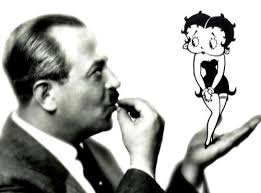 "It's kind of fun to do the impossible."
FLEISCHER BROTHERS
American brothers, producers of animated characters such as Betty Boop and Popeye. Walt Disney was their main rival in the 1930s because Disneys content was seen as better than Fleischer Stuidios due to the new movie 'Snow White' before the Fleischer Brothers brought out their first movie called 'Mr. Bug goes to town' so the Fleischer Brothers eventually lost their uniqueness.
Walt Disney was an American entrepreneur, cartoonist, animator, voice actor, film actor and film producer. In 1934 Disney got the idea of making a full length animated film which we came to know as 'Snow White and the Seven Dwarfs'. Following the success of Snow White, Walt Disney continued to make animation films such as 'Pinocchio' , 'Alice in Wonderland', 'Peter Pan' and 'Bambi' during the period of this it came to know as 'The Golden Age of Animation' between the years of 1937-1941.
"Disneyland will never be completed. It will continue to grow as long as there is imagination left in the world."
FLEISCHER BROTHERS
American brothers, producers of animated characters such as Betty Boop and Popeye. Walt Disney was their main rival in the 1930s because Disneys content was seen as better than Fleischer Stuidios due to the new movie 'Snow White' before the Fleischer Brothers brought out their first movie called 'Mr. Bug goes to town' so the Fleischer Brothers eventually lost their uniqueness.
PIXILATION
An example of this type of animation is by Norman McLaren called Neighbours. Pixilation is taking a picture of something then moving it very slightly and then taking another picture and continuing this loop.
60s
In the 60s we had cartoons such as The Flinstones and Scooby Doo. At this point animation was still cell based, but the drawing were not the quality before made feature films.
Tuesday, 6 October 2015
HISTORY OF CINEMA - C
Georges Méliès
 Georges Méliès was a french illusionist and film maker famous for inventing the use of special effects and was one of the first film makers to use time-lapse photography, hard colour (by painting every frame at once), dissolves and multiple exposures. Due to a variety of factors, roughly only about 200 of his films out of over 500, are extant.In these earliest films, Méliès began to experiment with (and often invent) special effects that were unique to filmmaking. This began, according to Méliès' memoirs, by accident when his camera jammed in the middle of a take and "a Madeleine-Bastille bus changed into a hearse and women changed into men. The substitution trick, called the stop trick, had been discovered." He first used these effects in The Vanishing Lady, in which the by then cliché magic trick of a person vanishing from the stage by means of a trap door is enhanced by the person turning into a skeleton until finally reappearing on the stage.

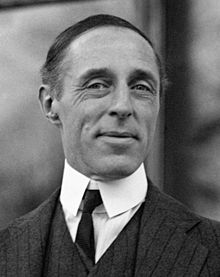
D. W.Griffith
D.W.Griffith was an American film director, mostly remembered as the director of the 1915 film The Birth of a Nation. The Birth of a Nation is considered important by film historians as one of the first feature length American films (most previous films had been less than one hour long), and it changed the industry's standard in a way still influential today.
Lumière brothers
The Lumiere brothers were french who were the inventors of Cinematography in 1895. They shot a film called 'Sortie de l'usine Lumiere de Lyon' which is considered to be the first true motion picture. During processes in the 1890s they worked on numerous colour photography including using the Lippmann process.
Monday, 5 October 2015


ANIMATION - K
WHAT IS PERSISTENCE OF VISION?
The term to describe the optical illusion whereby multiple discrete images blend into a single image in the human mind and believed to be the explanation for motion perception in cinema and animated films.
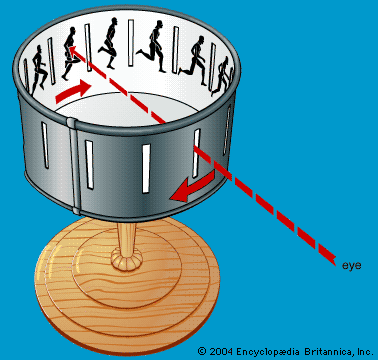
ZOETROPE
The zoetrope is an optical toy that produces an illusion of motion from a rapid succession of static images. It was made by Pierre Desvignes in the early 19th century.
KINETOSCOPE
 The Kinetoscope is an early motion picture exhibition device. The Kinetoscope was designed for films to be viewed by one individual at a time through a peephole viewer window at the top of the device

CELL BASED ANIMATION
CUT OUT ANIMATION
MODEL BASED ANIMATION
Model based animation also known as 'claymation' is created by making characters and props using clay and taking a picture with ever single move the props/character does.
TIME BASED ANIMATION
Time based animation is also known as a timelapse animation. A more popular type is where a certain someone may take a picture of themselves ever day for a few months and put all the pictures together. Or, one of the most common ones is of the sky throughout the day/night.
PIXILATION
Pixilation animation is where live actors are used.
FAMOUS ANIMATORS - K
Georges MélièsGeorges Méliès was a french illusionist and film maker famous for inventing the use of special effects and was one of the first film makers to use time-lapse photography, hard colour (by painting every frame at once), dissolves and multiple exposures. Due to a variety of factors, roughly only about 200 of his films out of over 500, are extant.
WINSOR MCCAY
 Winsor McCay was an american cartoonist and animator.For contractual reasons, he worked under the pen name Silas on the comic strip Dream of the Rarebit friend.McCay innovated with the forms of his chosen media. He varied the size and shape of comic strip panels for dramatic effect, as in the second instalment of Little Nemo (October 22, 1905), where the panels grow to adapt to a growing forest of mushrooms
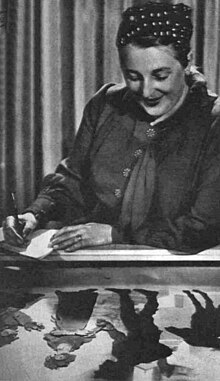 LOTTE REINIGER
Lotte Reiniger was a german film director and the foremost pioneer of silhouette animation. She made over 40 films over her career.She started making silhouette portraits of the various actors around her, and soon she was making elaborate title cards for Wegener's films, many of which featured her silhouettes.
WALT DISNEY -
Walt Disney was an American entrepreneur, cartoonist, animator, voice actor, film actor and film producer. In 1934 Disney got the idea of making a full length animated film which we came to know as 'Snow White and the Seven Dwarfs'. Following the success of Snow White, Walt Disney continued to make animation films such as 'Pinocchio' , 'Alice in Wonderland', 'Peter Pan' and 'Bambi' during the period of this it came to know as 'The Golden Age of Animation' between the years of 1937-1941.
Subscribe to:
Posts (Atom)